
Gen Z, Meet the OG of Sharing:
Your Public Library
Missy Hunter, Communications Manager
While raising two Gen Zs, I've realized that the concept of sharing is a big part of their culture. After all, they were brought up on Reduce, Reuse, Recycle. The other day, I asked my kids to list everything that shows this thinking, and it was way too long to share. No pun intended. From shared gym memberships and Spotify plans to thrifted clothing and even product reviews via user-generated content, sharing drives much of Gen Z's thinking.
Editor's note: Stories from the Stacks is a new edition to our WCLF newsletter designed to give an inside look at the people, programs, collections and projects that make our libraries vibrant community resources and gathering spaces—and see how WCLF supporters help make it all possible.
Let's be honest. Gen Z didn't invent sharing, and neither did their parents or even their grandparents. Andrew Carnegie started the first free public library in the US in 1886 to lend books. In other words, libraries have been sharing since before the Greatest Generation was born in the early 1900s.
Think about it: one book is purchased and then shared with hundreds of readers over its lifetime. We've been sharing for generations. With a library, very few new resources are consumed every time someone wants to read what's made the New York Times bestseller list. The library represents reuse, on repeat.
Libby is a reminder that sharing is digital, too. Through Libby, your library card gives you access to thousands of e-book and audiobook titles. The Contra Costa County Library and the Walnut Creek Library Foundation purchase audiobooks and e-books for the Walnut Creek and Ygnacio Valley Libraries every year to increase and update collections. Each title has a limited number of purchased licenses. Those licenses, shared across the community, represent the same sharing logic that makes thrifting feel smart, except libraries perfected the model first.
Thanks to your continued support, a $30,000 gift from the Walnut Creek Library Foundation just made that shared collection bigger, meaning shorter waits and more titles available the moment you want them.
So, the next time someone calls the library "old school," you can tell them it isn't. The library is the OG of sharing, and everyone else is just catching up.
The Walnut Creek Library is a Utopia for the Curious
Missy Hunter, Communications Manager
As a self-professed book addict, I have kept my favorites for sharing. I hand friends the unwrapped gift that I can’t wait for them to open. While recently decluttering my wall of books, I decided I’d listen to one at the same time. Fair trade, right? I downloaded the Libby app and started listening to the audiobook The Library Book by Susan Orlean, about the 1986 fire that destroyed 400,000 books and damaged 700,000 more at the Los Angeles Central Library. Reading this book reminded me of what I take for granted in a library.
It is no secret that California public schools are seeing larger budget cuts than ever. High school librarians in Walnut Creek are stretched thin, in some cases, covering multiple campuses at once. Additionally, Ygnacio Valley Library is now closed for renovations. The Walnut Creek Library is more essential than ever.
I took a tour with the Walnut Creek Library Manager, Addie Spanbock, who graciously led me through the library and shared a plethora of information. What began as a Carnegie Library in 1916, kitty corner from what is now City Hall and the police station, was relocated and rebuilt in 1961 at its current location. Then, in 2007, The Walnut Creek Library Foundation was formed to raise funds to support our two public libraries.
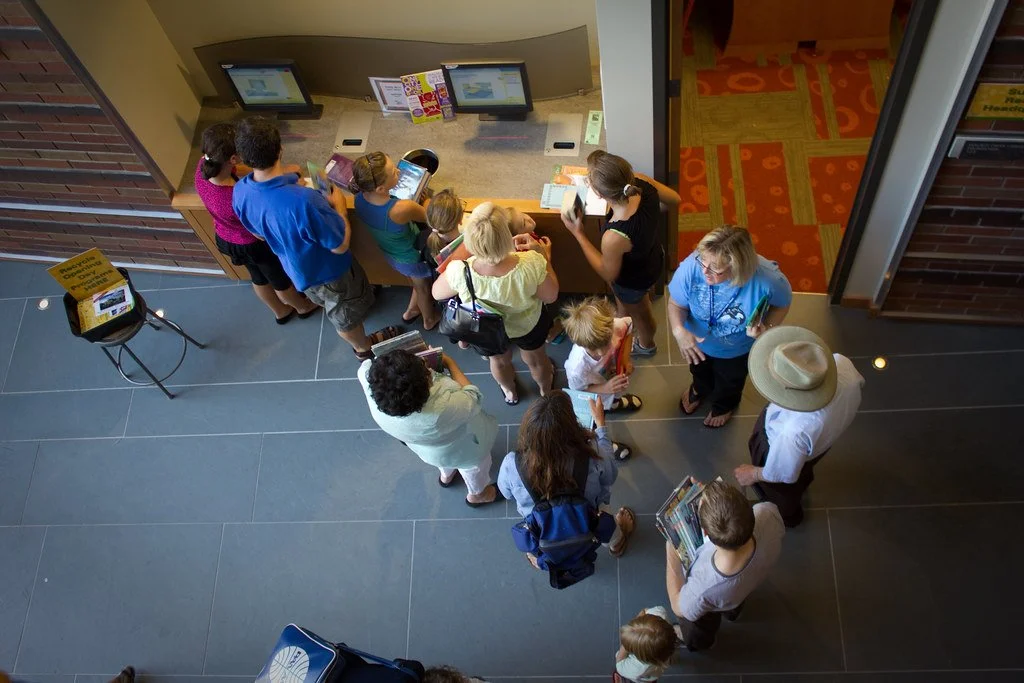
Walnut Creek community came together through voting and donations to build the Walnut Creek Library, which opened in 2010. I’ve decided that the Walnut Creek Library is a utopia for the curious. Here is some of what I discovered:
1. It’s the biggest library in Contra Costa County. At 42,000 square feet, it’s one thing to hear that, but I’m betting most Walnut Creek residents don’t know that fact. I didn’t. It’s something to appreciate while standing inside and marveling and what the community created.
2. The Walnut Creek Library is an art gallery, too. The Bedford Gallery curates the library’s art collection, which is so remarkable that when the library opened, there were tours specifically designed to introduce people to the artwork, and it continues to grow. A 1968 Jack Laycox painting titled Emerging Towers was recently donated by the estate of former Walnut Creek Mayor, Gwen Regalia. There is also a community art gallery, separate from the curated collection. This was created to encourage the development of artistic expression. Here’s to hoping we see some of our friends or neighbors’ artwork up there someday.
3. The library helps adults learn to read. The Contra Costa County Library has a program called Project Second Chance. Qualified adults get basic literacy instruction with volunteer tutors that Project Second Chance (PSC) trains and supports. The Walnut Creek Library provides a space for those tutoring sessions to take place. The Library Book did make the statement that “A library isn’t simply a warehouse for books. It’s a place where people’s lives can change.” The Walnut Creek Library is proving this every day.
4. History is hiding in plain sight. If you grew up in Walnut Creek, you likely visited The Walnut Creek Historical Society at Shadelands Ranch at some point during your school years. Did you know that the Walnut Creek Library also has history waiting for you to discover? If you poke around, you’ll see a collection of microfilm copies of various documents ranging from the first US Census in 1790 and local historical newspapers such as the Contra Costa Gazette from 1870 to more recent editions of the Contra Costa Times in 2013. This is one of the few places left in the county where you can find microfilm. Another historical vault exists in the library’s genealogy collection, with docents who can help with research.
5. The Russian language collection in the library exists nowhere else in the county. What makes libraries strong is knowing who lives within its community. While specific data for Walnut Creek is limited, word of mouth reports there is a significant Russian speaking community. It looks like you don’t have to be the average library user to find something that was collected with you in mind.
When I started listening to The Library Book, I thought I was listening to a book about a library fire. After my tour of the Walnut Creek Library, I am beginning to think I was listening to a book about communities. Because books are only one part of what happens inside a library.
A person learns to read. Someone searches for a newspaper from the day they were born. A child sees the shhh! art that spans the two-story height of the library. Someone purchases a book from the used bookstore. An adult sits at a computer. An artist gets a wall in the community library. A teenager finds a study room. A group hears about the behind the scenes thinking from an author. Someone finds their favorite Russian book. Someone walks in because they need a place to be. And someone like me borrows an e-book without ever walking through the front door and then realizes she probably should.
Maybe that’s the thing about libraries. They keep changing. Whether through books or not, libraries are places that keep finding new ways to take you somewhere.
Why Teen Library Programs Matter More Than Ever
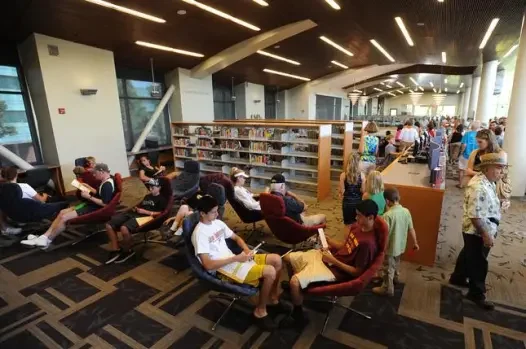
Teen library programs give young people a safe, welcoming place to study, create, connect, and explore their interests outside of school.